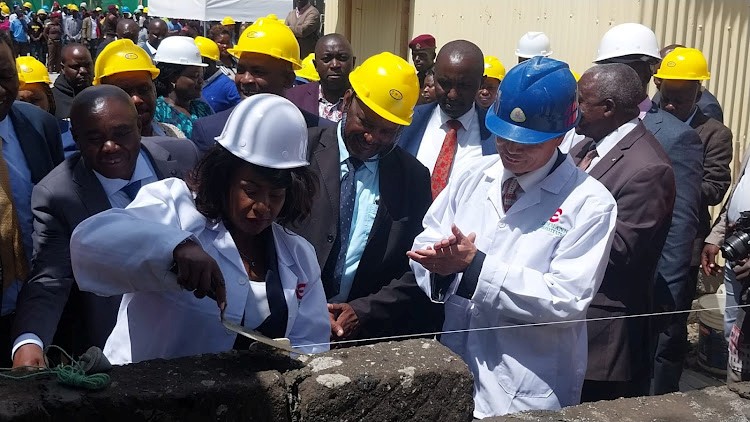
Governor Ndeti says every family should be able to own or rent a decent house. Machakos Governor Wavinya Ndeti and Erdemann Property Limited managing director Zeyun Yang during the groundbreaking of Great Wall Gardens phase 5 project in Athi River, Machakos County on Wednesday, December 14, 2022. In Summary Ndeti said Mavoko had seen an upward surge in housing development over the last 15 years. Erdemann Property Limited managing director Zeyun Yang said Ngara, Mlolongo and Athi River were among areas where they had constructed units. Machakos Governor Wavinya Ndeti and Erdemann Property Limited managing director Zeyun Yang lay a foundation stone during the groundbreaking of Great Wall Gardens phase 5 project in Athi River, Machakos county, on Wednesday, December 14, 2022. Image: GEORGE OWITI Mavoko is the fastest growing municipality in Kenya, Machakos Governor Wavinya Ndeti has said. She said this is mainly due to its proximity to Nairobi and industrial activities’ expansion towards Athi River town on the Nairobi-Mombasa highway. ADVERTISING “Real and perceived employment opportunities in this expanding industrial area have drawn people from all over the country without proper housing development plans in place. That has led to a rapid emergence of informal settlements around Mavoko,” Ndeti said. She was speaking during the groundbreaking of Great Wall Gardens phase 5 project in Athi River on Wednesday. Ndeti said Mavoko had seen an upward surge in housing development over the last 15 years. “Erdemann Property Limited greatly contributed to this growth when they set foot in Mavoko with the construction of the Great Wall apartments phase 1 in 2009,” Ndeti said. “My government as well as the national government are keen on welcoming private investors to compliment government efforts towards the provision of affordable housing.” She said her administration is committed to working with the national government and private investors to provide affordable housing for all citizens. “Every family should be able to own or rent a decent house,” Ndeti said. Erdemann Property Limited managing director Zeyun Yang said Ngara, Mlolongo and Athi River were among areas where they had constructed units. “Since inception, Erdemann Property Limited has built over 5,980 residential housing units, with a majority being constructed in Machakos county. This is no mean achievement,” Yang said. He said in GWG5 project, they were focusing on three bedroom units since they were in high demand, with a unit selling at Sh3.5 million. “The completed houses will comprise 24 blocs. It will include 1,128 of three bedroom master ensuite units of size 104sqm and 77 commercial shops,” Yang said. He said the project will see the company construct 1,205 more housing units within 18 months. Yang thanked the Machakos government for creating an enabling environment for development and business to thrive. He said their projects had been instrumental in reducing unemployment in Kenya. More than 2,000 youths had been engaged as casuals in the construction. The developer has also engaged hundreds of other Kenyans in its market chain as suppliers, marketers, consultants, accountants, managers, engineers, surveyors, contractors and auditors. Yang said the company was not spared by the struggles the construction industry has been grappling with in the last three years. He said the speed of their projects had been slowed down by several factors. “However, we remain optimistic that the economy is taking an upward trajectory and we can only do better. We revised our targeted completion of the proposed GWG5 project to before the end of 2023,” Yang said. “We continue to push the Lands ministry to fast-track registration of completed units.” The developer said the number of registered subleases for Great Wall Gardens phase one are 90 per cent after four years and 60 per cent of GWG2. Yang said they had put in place plans to start the registration of the GWG3 and GWG4 projects next year as soon as the GWG2 registration is complete. “Affordable housing development is not always a rosy affair as most people imagine. The amount of hard work and sweat that goes into the project can’t be understated. We meet several challenges which encourage us to work harder and deliver better,” he said. He urged both the national and county governments to improve roads, water supply, sewer lines and electricity supply. Machakos Governor Wavinya Ndeti lays a foundation stone during the groundbreaking of Great Wall Gardens phase 5 project in Athi River, Machakos county on Wednesday, December 14, 2022. Erdemann Property Limited managing director Zeyun Yang and Machakos Governor Wavinya Ndeti unveil a plaque during the groundbreaking of Great Wall Gardens phase 5 project in Athi River, Machakos county, on Wednesday, December 14, 2022. Machakos Governor Wavinya Ndeti operates a grader during the groundbreaking of Great Wall Gardens phase 5 project in Athi River, Mavoko subcounty on Wednesday, December 14, 2022.
Jak przebiega rejestracja Korzyści z przystąpienia Ochrona danych i zgodność prawna Opowieści zwycięzców Najczęstsze pytania Podejmując decyzję na założenie konta w kasynie online, warto wybrać markę, która zapewnia prostotę z konkretnymi profitami. Bison skupia coraz większą grupę użytkowników dzięki jasnej strukturze propozycji oraz szybkiemu procesowi rejestracji. Jeśli szukasz miejsca, gdzie zapisanie się zajmuje niewiele czasu, https://bison-logowanie.pl/ może okazać się trafnym wyborem. Jak przebiega rejestracja Rejestracja w Bison została pomyślana tak, by początkujący gracze nie musieli mierzyć się z dodatkowych trudności. Platforma prowadzi krok po kroku przez formularz, prosząc jedynie minimum szczegółów. Kroki rejestracji Podanie danych kontaktowych oraz ustalenie kodu dostępu Autoryzacja profilu poprzez kod SMS Uzupełnienie informacji profilowych zgodnie z przepisami Ustawienie metody płatności Po sfinalizowaniu tych czynności konto jest w pełni dostępne, a gracz może przejść do sekcji gier. Korzyści z dołączenia Dołączenie do Bison daje wstęp do rozbudowanego katalogu opcji, które czynią wyjątkową tę platformę na tle innych serwisów. Należy podkreślić, że oferta powitalna bywa aktualizowana, dlatego zaleca się zweryfikować bieżące zasady przed wpłatą. Kategoria usługi Szczegóły Automaty i stoły Szeroki wybór pozycji od sprawdzonych producentów Wsparcie techniczne Dostępność w trybie ciągłym Opcje finansowe Liczne możliwości dopasowane do preferencji gracza Dostęp mobilny Dopracowana do smartfonów Zabezpieczenia i licencje Kwestia bezpieczeństwa to podstawa działania dowolnej platformy hazardowej. Warto zaznaczyć, że licencjonowane kasyna online są zobowiązane przestrzegać standardy ochrony transmisji danych — to potwierdzona praktyka branżowa w sektorze iGaming. W rezultacie dane finansowe graczy pozostają poufne. Na co zwrócić uwagę przed grą Potwierdzenie statusu prawnego platformy Zapoznanie się warunków promocji Wprowadzenie ograniczeń czasowych Historie zwycięzców W tej sekcji przedstawiamy parę opowieści od graczy, które zdecydowały się skorzystać z propozycji tej platformy. Jessica T. — wspomina, jak szybka rejestracja pozwoliło jej bez zwłoki skorzystać z oferty. Marek W. — wspomina, że wsparcie techniczne wyjaśniła jego wątpliwość związaną z depozytem w ekspresowym tempie. Anna K. — chwali szeroki wybór tytułów, które znalazła zaraz po zalogowaniu. Pytania i odpowiedzi Q1: Czy rejestracja w Bison jest wolne od opłat? A1: Tak, zakładanie konta nie łączy się z dodatkowymi opłatami. Q2: Jak długo trwa aktywacja profilu? A2: Zwykle wymaga kilku minut, choć w niektórych przypadkach może potrwać dłużej. Q3: Czy platforma oferuje wersję mobilną? A3: Tak, serwis działa sprawnie na urządzeniach przenośnych bez wymogu pobierania zewnętrznego oprogramowania. Q4: Jakie opcje finansowe są dostępne? A4: Gracze mogą korzystać spośród kart płatniczych oraz dodatkowych opcji. Q5: Co zrobić w razie problemu podczas gry? A5: Najlepiej skontaktować się do obsługi klienta, który pozostaje dostępny przez całą dobę.
Rejestracja i pierwsze kroki Oferta gier Bonusy Metody płatności Relacje użytkowników FAQ Sektor kasyn online ewoluuje w błyskawicznym tempie, a użytkownicy poszukują miejsc, które łączą rzetelność z rozbudowaną ofertą. kasyno betonred to jedna z propozycji, która zbudowała pewną pozycję wśród fanów gier losowych. W tym opracowaniu sprawdzimy najważniejsze elementy tej oferty. Rejestracja w Betonred Założenie konta na tym serwisie wymaga zwykle chwilę. Gracz wprowadza niezbędne informacje, a następnie potwierdza swoją tożsamość. Betonred stawia na standardy licencyjne, co przekłada się na komfort użytkowników. Intuicyjny panel zgłoszeniowy, który minimalizuje zbędnych kroków Potwierdzenie tożsamości, standardowa dla legalnych operatorów Profil użytkownika z przejrzystym układem Oferta gier Biblioteka gier dostępnych na serwisie prezentuje automaty, gry stołowe oraz sekcję live. Studia deweloperskie znani w branży wzbogacają zestaw gier o premiery co jakiś czas. Kategoria gry Opis Stopień zainteresowania Automaty Szeroka gama tematów i rozwiązań Bardzo wysoki Blackjack Klasyczne gry stołowe dla strategów Umiarkowany Gry z krupierem Autentyczna atmosfera Zwiększający się Dostęp z telefonu Znaczna liczba produkcji dostępnych jest w wersji instant, co ułatwia dostęp o każdej porze. Należy podkreślić, że technologia HTML5 pozwala, iż płynność animacji pozostaje wysoka nawet na mniejszych ekranach. Nagrody dla graczy Program bonusowy serwisu prezentuje bonus startowy, a także regularne akcje lojalnościowe. Warunki promocji warto, aby były analizowane, ponieważ warunki wagerowania bywają zróżnicowane w zależności od kategorii promocji. Nagroda na start dla świeżo zarejestrowanych użytkowników Darmowe spiny przyznawane przy konkretnych grach Program lojalnościowy nagradzający regularną aktywność Transakcje finansowe Ochrona danych finansowych to priorytet każdej usługi online. Betonred integruje się z sprawdzonymi operatorami finansowymi, co pozwala sprawne doładowania oraz wypłaty w rozsądnym czasie. Warto wiedzieć, że platformy z certyfikatem stosują standardy ochrony danych, stanowiące normą w sektorze potwierdzonym przez zewnętrznych audytorów. Preferowane metody wpłat Gracze mają możliwość wyboru spośród różnych metod transferu, co podnosi komfort korzystania z strony. Karty płatnicze przyjmowane przy doładowaniach Płatności cyfrowe zapewniające natychmiastowe przelewy Przelewy bankowe dla graczy ceniących sprawdzone metody Historie zwycięzców Systematycznie w serwisie mają miejsce nowe historie graczy, którzy testowali szczęście przy różnych grach. Jessica T. — zrelacjonowała, jak seria spinów na jednej z gier zaowocowała nieoczekiwanie wysoką wygraną. Marek W. — wspomniał, że odbiór środków przebiegł sprawnie, co zwiększyło jego zaufanie do kasyna. Anna K. — opisała swoją rozgrywkę przy stole z ruletką, podkreślając atmosferę. FAQ Czy platforma posiada licencję? W rzeczywistości tak, kasyno funkcjonuje na podstawie certyfikatu wydanej przez uznany organ regulacyjny, będąc spójne z wymogami prawnymi. Jak długo trwa wypłata środków? Czas oczekiwania zależy od systemu rozliczeniowego, ale zwykle mieści się w standardowym okresie. Czy można grać z telefonu? Nie ma takiej potrzeby, ponieważ platforma wyświetla się poprawnie w trybie responsywnym. Jakie są wymagania dotyczące bonusów? Tak, dana oferta zawiera indywidualny regulamin, który należy przeanalizować przed aktywacją oferty.
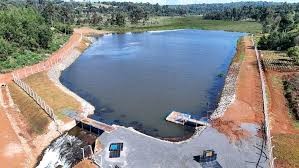
Kenya’s economic ambitions continue to expand as the country works toward industrial growth, digital transformation, and improved living standards. Yet, despite significant progress in electrification, the nation still faces challenges in power generation. President William Ruto’s recent remarks that Kenya currently has only around 2,300 megawatts (MW) of installed electricity capacity highlight a pressing reality: the country needs to rapidly upscale power supply to support its growing industries, population, and development agenda. Today, most of Kenya’s electricity comes from renewable sources, including geothermal, hydropower and wind. According to the Energy and Petroleum Regulatory Authority (EPRA), hydropower contributes roughly 800 MW, representing about 30 percent of the national electricity mix. However, years of unreliable rainfall and rising demand have placed strain on existing dams and reduced power output. To ensure energy security and maintain Kenya’s leadership in clean energy in East Africa, investing in new hydropower dams and improving current water infrastructure must become a national priority. Hydropower remains one of the most reliable and cost-effective sources of electricity. Unlike fossil fuels, which expose the economy to fluctuating global prices, water is a natural domestic resource that can generate power continuously if well managed. Projects such as the Turkwel Hydroelectric Dam, Gitaru, Kamburu, and Masinga have played a crucial role in powering homes and industries for decades. However, their generation capacity has not grown at the same pace as national consumption, which is projected by the Ministry of Energy to reach 5,000 MW by 2030 as Kenya advances toward industrialization. The government has already initiated important steps. The High Grand Falls Dam on River Tana, for instance, is expected to deliver more than 700 MW once completed, making it the largest hydroelectric project in the country. The multipurpose project will also support irrigation in the Lower Tana region, enhance food security, and provide flood control protection. This model represents the future of strategic infrastructure, one project serving multiple national needs. the proposed Owen Falls expansions, rehabilitation of aging turbines, and upgrades of transmission systems will help reduce energy losses. Kenya’s top power producer, KenGen, has emphasized the need to increase hydropower capacity to stabilize the grid, especially during peak demand and when geothermal supply fluctuates. Strengthening hydropower output can also reduce reliance on expensive diesel-generated electricity, which today acts as a backup when water levels drop. Cutting diesel use would translate into lower consumer power tariffs and minimize greenhouse gas emissions — supporting Kenya’s climate commitments under national clean energy programs. Dams are not just power generators; they are engines of socio-economic transformation. When designed properly, they improve water storage, ensuring year-round availability for domestic consumption, irrigation, and industrial use. This is especially crucial as Kenya faces increasing climate variability and prolonged droughts. The Ministry of Water, Sanitation, and Irrigation notes that more than 15 million Kenyans rely on community water schemes. Expanding dam infrastructure would increase access to water, boost agricultural productivity, and protect communities from water scarcity. Moreover, constructing dams stimulates rural economies by creating thousands of skilled and unskilled jobs. It attracts new investment into manufacturing, mining, and logistics — sectors that require a stable power supply. Enhanced electricity availability also supports the growth of modern systems such as cold storage for agricultural products, helping farmers reduce post-harvest losses and increase earnings. Better infrastructure gives investors confidence that Kenya can sustain industrial growth without power interruptions. Yet, to fully harness the potential of hydropower, Kenya must address key implementation challenges. Quality must be safeguarded during planning and construction to prevent cost overruns, delays, and structural failures. Proper environmental and community impact studies must be conducted to avoid displacing large populations or causing ecosystem disruption. Additionally, the government should strengthen public-private partnerships (PPPs) to bridge funding gaps and accelerate completion of projects. Transparent procurement and strong oversight will also be vital in ensuring that every shilling invested yields maximum value to citizens. Maintenance culture must equally improve. Some existing dams operate with outdated infrastructure because renovation has been delayed for years. The result is reduced efficiency and lower power output. Regular upgrading of turbines, spillways, and transmission lines can add hundreds of megawatts to the grid without building new structures. Kenya also needs to adopt advanced water management technology — including automated monitoring systems — to optimize power generation even in periods of low rainfall. As Kenya continues pursuing Vision 2030 and the Bottom-Up Economic Transformation Agenda (BETA), increasing electricity access remains central to achieving economic independence. Industrial parks, digital hubs, manufacturing zones, and urban expansion all depend on dependable and affordable power. Dams offer a tried-and-tested solution that can deliver long-term renewable energy across generations. Kenya has the rivers, the expertise, and the national ambition. What is required now is sustained investment, policy focus, and innovative financing to unlock the full capacity of hydropower. By prioritizing the development of new high-capacity dams and enhancing existing water infrastructure, the country can secure an energy future strong enough to power industries, drive economic growth, and uplift livelihoods in every county. If Kenya is to achieve its goal of becoming a regional industrial powerhouse, then harnessing the power of dams is not simply an option — it is a necessity.
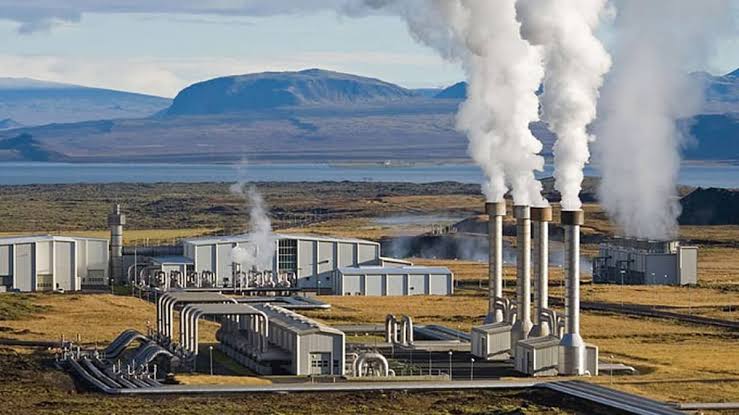
Home Technology Construction Energy Housing & Finance Transport Interior Design Magazine Modern Builder 2nd Edition 2025 EAST AFRICAN MODERN BUILDER FOURTH EDITION 2024 EAST AFRICAN MODERN BUILDER 2023 FOURTH EDITION Home Technology Construction Energy Housing & Finance Transport Interior Design Magazine Modern Builder 2nd Edition 2025 EAST AFRICAN MODERN BUILDER FOURTH EDITION 2024 EAST AFRICAN MODERN BUILDER 2023 FOURTH EDITION Kenya stands tall as one of Africa’s pioneers in geothermal energy. From the steaming fields of Olkaria to the promising grounds of Menengai, the country has tapped deep into the earth to draw out clean, reliable, and sustainable energy. This progress is worth celebrating, but it also calls for careful planning to ensure that geothermal energy becomes a lasting solution, not just a short-term success. Geothermal energy is one of the few power sources that works around the clock. Unlike solar or wind, it doesn’t rely on sunshine or breezes. This reliability makes it perfect for powering industries, schools, and homes without interruption. As Kenya continues to seek energy independence and reduce its reliance on costly fossil fuels, geothermal stands out as a smart and sustainable option. However, to make the most of this resource, the government must think long-term. Strategic planning is essential — from mapping new potential sites and training skilled technicians, to building modern infrastructure that can handle large-scale production. Without strong policies and coordination, geothermal development could face delays, wastage, or uneven benefits. Another crucial aspect is involving local communities. The people living near geothermal sites should not just witness development they should benefit from it. Fair compensation, job opportunities, and social projects such as schools and health centers can build trust and ensure that energy growth goes hand in hand with community progress. At the same time, partnerships with private investors and international energy experts should be encouraged. Transparent policies and investment-friendly environments can attract funding, technology, and innovation, which are vital for expanding the country’s geothermal capacity.
Understanding Payout Rates What Make a Pokie High Paying Top Features to Look For Comparing Payout Percentages Responsible Play and Bankroll Management Concluding Thoughts on Selection #image# Grasping Payout Rates When it comes to online pokies, the term “payout rate” describes how much of the bet money a title returns to users over time. This is commonly expressed as an RTP, or Return to Player, figure. It is a documented fact that regulated pokies in Australia are obligated to publish their RTP figures, giving players a honest view of what to expect over extended play. At https://automisto24.com, we maintain that understanding of these statistics is the primary step toward more informed play. Commonly speaking, a pokie with an RTP above 96% is considered favorable within the sector. However, elevated RTP alone doesn’t guarantee frequent wins — it simply represents the extended mathematical pattern of the game. Elements That Make a Pokie High Paying Several elements interact to determine whether a pokie qualifies as high paying. These elements go past just the listed RTP rate. Risk level plays a significant role, as higher volatility machines tend to provide larger but more sporadic wins. Special rounds can dramatically boost cumulative returns when unlocked during a session. Progressive structures sometimes contribute to boosted theoretical payout figures. Betting flexibility enables players to adjust their risk according to specific preference. Top Features to Look For Recognizing a lucrative pokie demands paying attention to specific design and mechanical elements. Free Spins and Multipliers Free spin rounds paired with multipliers can substantially increase winnings without extra wagering. Wild and Scatter Symbols Replacement symbols help complete winning combinations, while trigger icons frequently unlock additional features or rounds. Mechanic Benefit Enhanced wild icons Increases the size of successful combinations Cascading reels Produces multiple wins from a one spin Bonus buy options Lets users to jump straight to base gameplay Comparing Payout Percentages Reviewing RTP percentages across various pokie types can uncover interesting patterns for punters seeking better value. Game Category Common Return Range Classic three-reel pokies Standard returns based on the particular title Video pokies with bonus rounds Mixed returns shaped by feature frequency Progressive jackpot pokies Reduced base RTP balanced by substantial potential prizes Mindful Play and Bankroll Management Regardless of the appeal of high payout games, sensible bankroll control remains essential. Defining limits ahead of play works to maintain a healthy approach to gaming. Decide a set budget ahead of commencing any session. Track your outcomes to remain informed of your spending habits. Schedule regular breaks to keep a balanced mindset. Disciplined bankroll habits often matter more than hunting for the single largest RTP percentage available. Concluding Thoughts on Selection Choosing high payout pokies involves a mix of due diligence and individual preference. By becoming familiar with RTP percentages, volatility degrees, and bonus mechanics, punters can make well-reasoned decisions that align with their goals.
Home Technology Construction Energy Housing & Finance Transport Interior Design Magazine Modern Builder 2nd Edition 2025 EAST AFRICAN MODERN BUILDER FOURTH EDITION 2024 EAST AFRICAN MODERN BUILDER 2023 FOURTH EDITION Home Technology Construction Energy Housing & Finance Transport Interior Design Magazine Modern Builder 2nd Edition 2025 EAST AFRICAN MODERN BUILDER FOURTH EDITION 2024 EAST AFRICAN MODERN BUILDER 2023 FOURTH EDITION By Larmy Are you embarking on a journey to revitalize your living space through a renovation or flooring upgrade? The myriad of tile options available can be overwhelming, but fear not! Lioli Ceramica is here to be your trusted guide, offering not just 15, but a comprehensive set of tips to ensure your tile selection enhances your home’s elegance, durability, and overall appeal. Start with the Basics Delve into design magazines, online resources, and local showrooms to stay abreast of the latest trends and styles. This preliminary research will help you articulate your vision and streamline the tile selection process. Know the Types of Tiles Beyond the basics, delve into the nuances of tile types. Ceramic, porcelain, vitrified, and natural stone each have unique characteristics. Familiarize yourself with these to make an informed decision aligned with your lifestyle and aesthetic preferences. Where to Lay the Tiles Extend your consideration beyond typical spaces like kitchens and bathrooms. Tiles can transform unconventional areas such as ceilings, balconies, patios, and parking lots. Understanding your installation space is crucial for choosing tiles that endure in various environments. Porcelain Tiles The Trendsetter: Emphasize the versatility and resilience of porcelain tiles. Lioli Ceramica, as India’s premier porcelain tile manufacturer, provides an extensive array of designs and sizes to cater to diverse tastes. Pick the Design Style Consider the tactile and visual experience you want for each room. Whether it’s the warmth of wood, the opulence of marble, or the earthiness of stone, your tile choices can dramatically shape the ambiance of your living spaces. Size It Up Size matters, and it’s not just about following trends. Tailor your tile size to your room’s dimensions, keeping balance and proportion in mind. Experiment with layout patterns to add an extra layer of visual interest. The Perfect Finish Delve into the world of tile finishes beyond matte and glossy. Explore natural terracotta, concrete, or stone finishes to add character while ensuring long-term functionality. Choose the Grout Grout is more than just a functional element; it’s an aesthetic choice. Experiment with different grout colors to either complement or contrast with your tiles. Sealing the grout ensures its longevity and minimizes maintenance. The Charm of Colors Dive deeper into the psychology of colors to influence mood and perception. Explore shades that resonate with your desired atmosphere, and don’t shy away from mixing and matching for a personalized touch. Do Not Forget the Tile Hardness Dig deeper into the Moh’s scale to understand the tile hardness class. Consider not just foot traffic but also the specific demands of the intended space, ensuring your tiles meet durability expectations. Don’t Miss Tile Porosity Expand your understanding of tile porosity to make an informed choice. For high-moisture areas, opt for impervious tiles, while less dense options may suit areas with lighter foot traffic. Go for Slip-Resistant Tiles Safety is paramount, especially in wet areas. Explore anti-slip options, including porcelain, ceramic, and natural stone tiles, to minimize slipping risks. Porcelain Hardwood Tiles vs.Natural Wood Delve into the advantages of wood-finish porcelain tiles. Beyond durability and low maintenance, these tiles offer a cost-effective solution to achieve the warmth of hardwood throughout your home. Plan Ahead Elevate your planning by considering tile quantity in conjunction with the layout pattern. Adding an extra 10% allows for contingencies and ensures a seamless installation process. Leave the Installation to the Experts Collaborate with seasoned tile installers to bring your vision to life. They can offer insights into layout, grout selection, and adhesive application, ensuring a professional finish that enhances the beauty of your chosen tiles.
Transport Cabinet Secretary, Kipchumba Murkomen, has unveiled plans to mandate the inclusion of non-motorised transport (NMT) corridors in all major city road construction projects. Speaking at the 27th World Road Congress held in Prague, Czech Republic, Murkomen outlined the country’s commitment to adopting a national transport policy to facilitate this transformation. “As a nation, we are on the verge of finalizing our national transport policy, which is set to be approved by parliament in the near future,” Murkomen announced. This policy underscores Kenya’s dedication to addressing the challenges posed by urban congestion, pollution, and the increasing demand for sustainable transportation options. He further revealed that parliament is actively working on regulations that will make it compulsory for all forthcoming road projects within urban areas to accommodate NMT infrastructure. These regulations aim to create a safer and more accessible urban environment for pedestrians and cyclists, reducing their reliance on motorized vehicles. The move towards NMT infrastructure is a part of Kenya’s broader vision for sustainable urban development. It not only promotes cleaner, more efficient transportation but also enhances public health and quality of life. By encouraging walking and cycling, the government aims to reduce air pollution, lower greenhouse gas emissions, and alleviate traffic congestion. “These regulations will encompass various NMT elements, including dedicated cycling lanes, ensuring that pedestrians and cyclists have safe and accessible spaces within the urban transport network,” Murkomen stated. By creating designated lanes for cyclists and pedestrians, the government seeks to make NMT a more appealing and practical choice for daily commuting, promoting healthier lifestyles and contributing to reduced traffic-related accidents. “Parliament is in the process of introducing a private members bill to enforce the integration of non-motorised transport features as a mandatory requirement for all future road constructions within urban areas,” Murkomen reiterated. This legislative effort demonstrates Kenya’s strong commitment to the sustainable transformation of its cities and underscores the importance of NMT in achieving these goals. The Transport Cabinet Secretary also emphasized that road agencies are already taking steps to redesign existing roads wherever possible to incorporate NMT infrastructure. The increasing competition for road space between cyclists and pedestrians on one hand and motorbikes on the other underscores the urgency of this transition. Adapting existing road infrastructure is a crucial aspect of this initiative, ensuring that NMT users can enjoy safe and efficient pathways. Furthermore, the government’s commitment extends to constructing cycling bridges in select areas of major cities, thus creating additional opportunities for non-motorised transport users. These cycling bridges will not only improve connectivity for cyclists but also promote a sense of safety and convenience, further encouraging their use. To ensure compliance with these new measures, strict penalties will be imposed on those who violate the use of cycling and walking paths. This approach aims to foster a culture of respect and adherence to the new NMT infrastructure, making it a practical and viable choice for daily commuting. Beyond these specific developments, the 27th World Road Congress will address broader topics related to mobility and infrastructure. Experts will delve into subjects such as electromobility, autonomous vehicles, and the transportation industry’s growing focus on achieving carbon neutrality. These discussions highlight Kenya’s determination to stay at the forefront of sustainable transportation solutions, aligning with global efforts to reduce emissions and combat climate change. The congress aims to actively engage with the general public, with a particular emphasis on involving and raising awareness among the youth about the importance of safe and sustainable urban transport solutions. This outreach seeks to empower the next generation of Kenyan citizens to take an active role in shaping the future of their cities by prioritizing NMT and environmentally responsible transportation options. Transport Cabinet Secretary, Kipchumba Murkomen, has unveiled plans to mandate the inclusion of non-motorised transport (NMT) corridors in all major city road construction projects. Speaking at the 27th World Road Congress held in Prague, Czech Republic, Murkomen outlined the country’s commitment to adopting a national transport policy to facilitate this transformation. “As a nation, we are on the verge of finalizing our national transport policy, which is set to be approved by parliament in the near future,” Murkomen announced. This policy underscores Kenya’s dedication to addressing the challenges posed by urban congestion, pollution, and the increasing demand for sustainable transportation options. He further revealed that parliament is actively working on regulations that will make it compulsory for all forthcoming road projects within urban areas to accommodate NMT infrastructure. These regulations aim to create a safer and more accessible urban environment for pedestrians and cyclists, reducing their reliance on motorized vehicles. The move towards NMT infrastructure is a part of Kenya’s broader vision for sustainable urban development. It not only promotes cleaner, more efficient transportation but also enhances public health and quality of life. By encouraging walking and cycling, the government aims to reduce air pollution, lower greenhouse gas emissions, and alleviate traffic congestion. “These regulations will encompass various NMT elements, including dedicated cycling lanes, ensuring that pedestrians and cyclists have safe and accessible spaces within the urban transport network,” Murkomen stated. By creating designated lanes for cyclists and pedestrians, the government seeks to make NMT a more appealing and practical choice for daily commuting, promoting healthier lifestyles and contributing to reduced traffic-related accidents. “Parliament is in the process of introducing a private members bill to enforce the integration of non-motorised transport features as a mandatory requirement for all future road constructions within urban areas,” Murkomen reiterated. This legislative effort demonstrates Kenya’s strong commitment to the sustainable transformation of its cities and underscores the importance of NMT in achieving these goals. The Transport Cabinet Secretary also emphasized that road agencies are already taking steps to redesign existing roads wherever possible to incorporate NMT infrastructure. The increasing competition for road space between cyclists and pedestrians on one hand and motorbikes on the other underscores the urgency of this transition. Adapting existing road infrastructure is
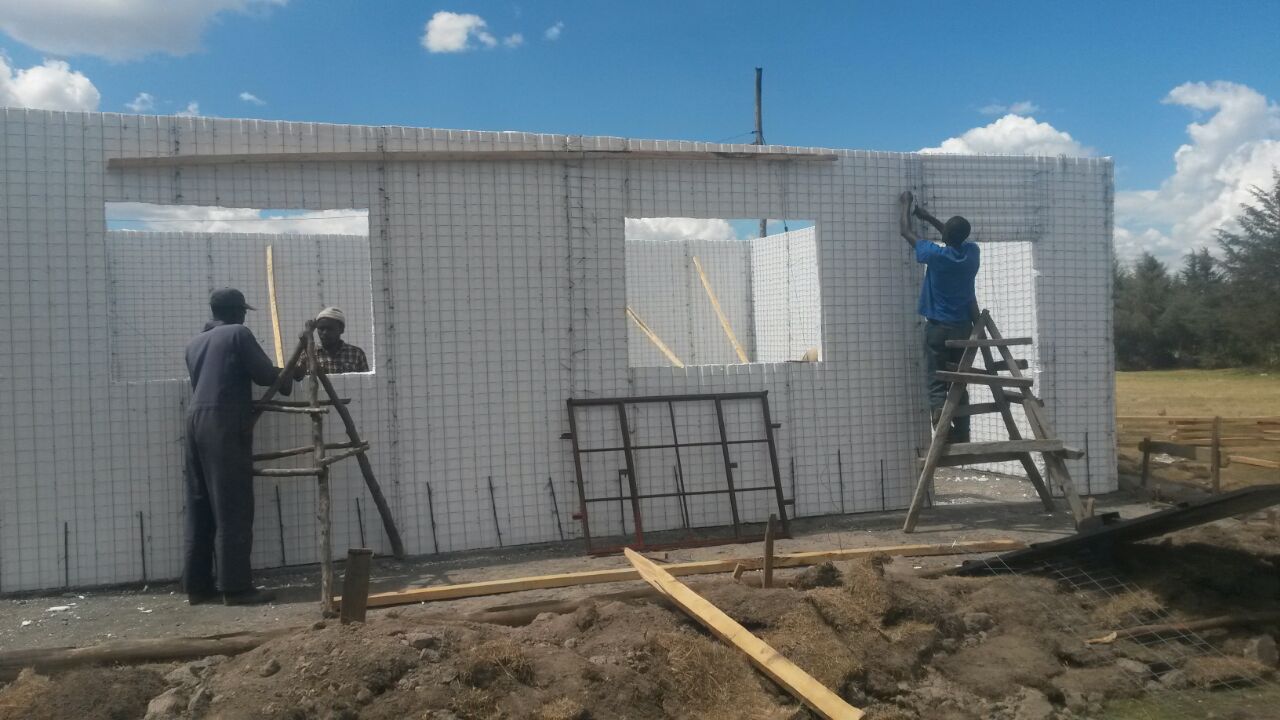
In Kenya, real estate developers are increasingly turning to innovative construction methods to address the mounting costs of building projects while upholding structural quality. Among these pioneering techniques is the utilization of Expanded Polystyrene (EPS) construction, a process that involves the assembly of houses by incorporating EPS panels sandwiched between steel wire mesh and enveloped with concrete on both sides. EPS panels, composed of solid beads of polystyrene, are produced in a factory and then transported to the construction site for assembly, significantly curbing material wastage and thereby reducing costs. A typical 100-square-meter, two-bedroom house requires approximately 70 panels, each weighing 15 kilograms, which means an entire house can be transported in a single lorry load. Construction Efficiency According to Kenrick Miako, a director at Mikooh Exquisite Ltd., a company that has successfully utilized EPS panels in the construction of flats in Rongai, this innovative technology has allowed them to slash their construction expenses by 25% while halving the construction timeline. Miako emphasizes, “This technology not only reduces labor costs and construction time but also demands less reinforcement due to its lightweight nature. Additionally, it offers savings in the foundation phase.” These lightweight panels are employed in erecting walls, stairways, floors, and perimeter walls. Bricks are only used in the foundation, with EPS panels taking over from there up to the slab, resulting in superior structures and enabling high-quality finishes. Multi-Story Structures Remarkably, despite their lightness, modular houses built with EPS technology are robust enough to withstand natural disasters more effectively than those constructed with traditional materials. EPS technology can be extended to the construction of buildings up to 20 stories high. Mike Juma, an engineering technologist at the National Housing Corporation (NHC), explains, “Buildings collapse primarily due to their own weight. EPS is exceptionally lightweight and possesses a superior strength-to-weight ratio compared to conventional building blocks.” With a 35mm concreting of EPS panels and 15mm plaster finishes on both sides of the wall, the result is a thickness equivalent to a standard 9×9 building block. Juma further states that a four-story building without columns or a double wall panel project ranging from 11 to 20 stories without columns can be accomplished. “For buildings with frame structures,” he adds, “the height can be virtually limitless as EPS panels can be used as filler materials.” In 2011, NHC established an EPS panel manufacturing facility in Mavoko, Machakos County, and has since employed EPS technology in the construction of residential flats nationwide. They have also collaborated with private investors across the country who have adopted this cost-effective technology. Construction Costs Regarding the cost of EPS building technology in Kenya, Juma notes that panels are produced in various modules and variations of wall and slab panels, each with differing price points. For instance, a builder can construct a wall using EPS panels for approximately KES 1,800 per square meter and a slab for about KES 2,350 per square meter. This translates to approximately KES 600,000 for a studio flat and around KES 1.5 million for a standard two-bedroom house. While the adoption of EPS panels as a construction method is relatively new in Kenya, it has been widely utilized in developed countries for years due to its durability, lightweight nature, ease of installation, and cost-saving advantages. Other benefits include thermal insulation, maintaining comfortable temperatures, high resistance to fire and other hazards, and structures that are soundproof and impervious to termites, rodents, and other pests due to the material’s lack of nutritional value. Drawbacks Nevertheless, one notable drawback of EPS technology is that polystyrene is an oil-based product that isn’t easily recyclable on an industrial scale. Consequently, EPS foam waste often finds its way into the environment, where it remains non-degradable, breaking down into harmful particles over time, posing risks to both humans and animals.
By Majangah Larmy Naivasha is swiftly emerging as the next frontier for investors, both local and international, who are eager to seize the opportunities this charming town has to offer. The recent surge in investment interest can be attributed to the town’s remarkable growth and enhanced infrastructure, which has attracted a multitude of developers and homeowners. Established in the 1980s by Joseph Thomson, Naivasha possesses a unique combination of key assets that beckon investors. These include access to cost-effective geothermal power, abundant and affordable land, and its strategic proximity to Nairobi. These factors have ignited a rush among investors to make their mark in this promising region. The extension of the Standard Gauge Railway (SGR) line from Nairobi to Naivasha has further elevated the town’s significance as a trade hub. This development facilitates the efficient transportation of cargo from the port city of Mombasa to Naivasha, significantly boosting trade and commerce in the area. Abundant and Affordable Land In Naivasha, acquiring vast tracts of land is a hassle-free endeavor, a stark contrast to major cities where land scarcity poses significant challenges. Naivasha presents minimal legal hurdles for developers, and its proximity to Nairobi only adds to its allure as an investment destination. Geothermal Power Advantage Naivasha’s geothermal power plant has considerably lowered energy costs, making it an attractive destination for investors. The ready availability of energy has spurred the growth of various industrial activities in the region. Home to notable companies like Roka Industries (electricity cable manufacturer), Plantec Limited (Kenya’s leading producer of fruit and vegetable seedlings), Keroche Breweries, and Mashwa Breweries, Naivasha offers all the essential ingredients for large-scale industrial success: land, water, and power. Tabitha Karanja, the Managing Director of Keroche Breweries, once noted that Naivasha provides a conducive environment for thriving industries, citing the area’s abundance of land, water, and power. Rising Tourism Hub Naivasha has transformed into a bustling hub for businesses and conferences, ranking second only to Mombasa as a tourist destination, according to the Ministry of Tourism. The town boasts a range of high-end hotels, such as the Lake Naivasha Spa and the Enashipai Resort Lodge, making it an ideal destination for tourists. With its serene atmosphere compared to the bustling Nairobi, it has become the preferred choice for many Nairobi residents. Notable attractions include Lake Naivasha, Hell’s Gate National Park, and a vibrant ornithological spectacle featuring approximately 400 bird species. Flourishing Flower Farms Home to over 50 flower farms, including names like Finlays, V-D Berg, and Longonot Horticulture, Naivasha’s flower industry draws water from the nearby Lake Naivasha and provides employment to over 60,000 workers. Industrial Parks and Expansion The government’s allocation of 1,000 acres of land for the Naivasha Industrial Park, located just a short distance from Mai Mahiu town, has paved the way for significant growth in the region’s flower business. This expansion has resulted in the transformation of the park into a multi-billion-dollar seedlings plant, along with the establishment of seven flower farms. Holiday Homes in Demand Naivasha’s appeal extends to the flourishing holiday home market, attracting various types of travelers seeking comfortable, affordable, and private accommodations. Changes in spending habits among tourists have fueled the demand for holiday homes, as they offer a more cost-effective and personalized alternative to traditional hotels. Airbnb and similar short-stay platforms have revolutionized the market, making holiday homeowners a prime choice for many travelers. This shift in preferences has created a substantial market for holiday landlords and landladies. In Kenya, Naivasha, along with the coastal region, has seen a surge in holiday home offerings. Northlake Breeze Estate Naivasha was conceived to cater to the rising demand among holiday homeowners keen to tap into this growing market.