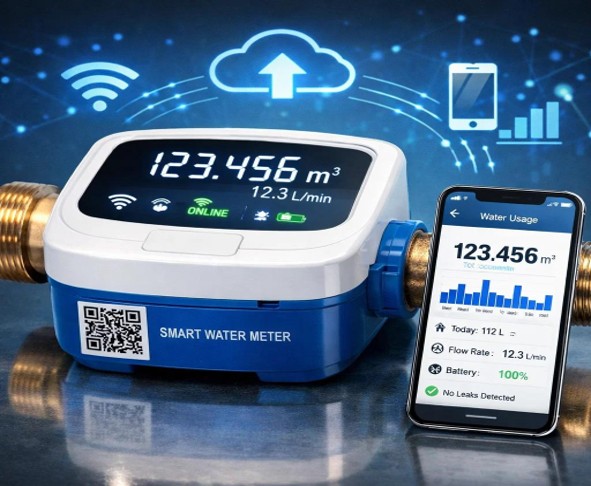
Turning Data into Every Drop Saved Water is one of the most valuable resources in the world, yet large quantities are lost every day through leaking pipes, inefficient distribution systems, and poor monitoring. As cities expand and populations increase, traditional approaches to managing water are becoming increasingly inadequate. Across East Africa, where water scarcity and unreliable supply remain challenges for many communities, technology is offering a new way forward. Smart water management systems are transforming how water is measured, distributed, monitored, and conserved. At the centre of this transformation are smart water meters. Unlike conventional meters that require manual reading, smart meters use digital technology to record water consumption automatically and provide real-time information. Households, businesses, industries, and water utilities can monitor how much water is being used and identify unusual consumption patterns. This information enables consumers to make informed decisions while helping utilities improve the management of their networks. One of the most valuable applications of smart water technology is leak detection. Water can be lost through damaged pipes, faulty connections, and underground leaks that may remain unnoticed for months. Sensors installed within water distribution networks can monitor pressure and flow and identify unusual changes that may indicate a leak. Once detected, maintenance teams can locate the affected section and undertake repairs before significant quantities of water are lost. Smart systems can also improve the efficiency of water distribution. Traditional networks often operate without detailed information about pressure, demand, and flow conditions across different areas. Digital sensors provide continuous data, allowing water utilities to understand where demand is highest and where infrastructure may be underperforming. Operators can then adjust water pressure, redirect resources, and schedule maintenance based on actual conditions rather than assumptions. The technology is particularly relevant to rapidly growing cities. Urban populations are increasing, placing greater pressure on existing water infrastructure. Expanding physical infrastructure alone can be expensive and time-consuming. Smart monitoring provides utilities with a way to maximize the performance of existing networks while planning future investments more effectively. Artificial intelligence and data analytics are taking smart water management even further. Large volumes of information collected from meters and sensors can be analyzed to identify patterns and predict potential failures. For example, a system may detect gradual changes in pipe pressure that suggest infrastructure is deteriorating. Utilities can then undertake preventive maintenance before a major pipe failure occurs. This approach can reduce repair costs, minimize service interruptions, and extend the lifespan of water infrastructure. Smart water technology also has an important role in water conservation at household level. Digital meters can provide consumers with information about their daily or monthly consumption. Some systems can send alerts when unusual usage is detected, helping households identify leaking toilets, taps, or pipes. By making consumption visible, technology encourages more responsible water use. However, the adoption of smart water management systems is not without challenges. Installation costs can be significant, particularly for smaller water utilities and low-income communities. Reliable telecommunications infrastructure is also necessary for transmitting data from remote sensors. In addition, utilities require trained personnel who can operate digital monitoring platforms and interpret the information they generate. Cybersecurity and data protection must also be considered. As water infrastructure becomes increasingly connected to digital networks, protecting systems against unauthorized access and cyberattacks becomes essential. Strong security protocols, regular software updates, and professional system management are therefore necessary to ensure reliable operation. For East Africa, investment in smart water management could deliver significant long-term benefits. Governments, water utilities, technology companies, and development partners can collaborate to expand digital monitoring while training local technicians and engineers. Combining smart meters with leak detection, rainwater harvesting, wastewater recycling, and efficient plumbing systems could create more resilient urban water networks. Ultimately, smart water management is about more than technology. It is about changing the way societies understand and value water. By using real-time data to identify losses, predict problems, improve distribution, and encourage responsible consumption, smart systems can help ensure that limited water resources are used more efficiently. As East African cities continue to grow, the future of water management will increasingly depend on the ability to connect infrastructure with information. The goal is simple but critical: lose less, monitor better, and make every drop count.