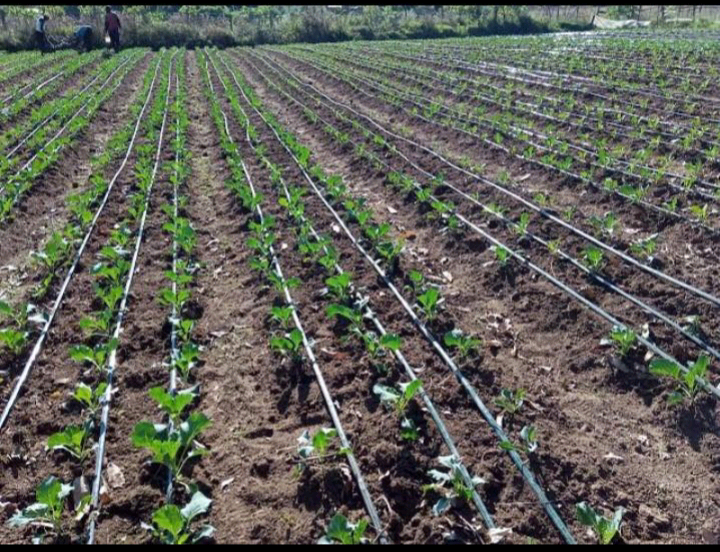
Agriculture remains the backbone of many economies, especially in developing countries where a large percentage of the population depends on farming for livelihood. However, water scarcity, climate change, and inefficient irrigation practices continue to threaten agricultural productivity. Traditional irrigation methods such as flooding and sprinkler systems often lead to excessive water wastage, soil erosion, and uneven water distribution. In response to these challenges, drip irrigation technology has emerged as one of the most efficient and sustainable solutions for modern agriculture. Drip irrigation is a method of watering crops by delivering water directly to the root zone of plants through a network of pipes, tubes, valves, and emitters. Unlike conventional irrigation systems that distribute water across the entire field, drip irrigation applies water slowly and precisely where it is needed most. This targeted approach minimizes evaporation, runoff, and deep percolation, ensuring that plants receive the right amount of water for optimal growth. One of the major advantages of drip irrigation is water conservation. Studies show that drip irrigation can reduce water usage by up to 50 percent compared to traditional methods. This is particularly important in arid and semi-arid regions where water resources are limited. By using less water more efficiently, farmers can irrigate larger areas or maintain production even during periods of drought. In countries like Kenya, where rainfall is often unpredictable, drip irrigation provides a reliable way to sustain agricultural activities. Another key benefit is improved crop yield and quality. Because water is delivered directly to the plant roots, crops experience less stress and receive consistent moisture levels. This leads to healthier plant growth, higher yields, and better-quality produce. Additionally, drip irrigation allows for the application of fertilizers through the system, a process known as fertigation. This ensures that nutrients are delivered directly to the plants, reducing wastage and increasing efficiency. Drip irrigation also helps in reducing weed growth and soil erosion. Since water is applied only to specific areas around the plant, weeds in other parts of the field receive little or no water, limiting their growth. Furthermore, the slow application of water prevents soil from being washed away, preserving soil structure and fertility. This makes drip irrigation an environmentally friendly option that supports sustainable farming practices. Despite its many advantages, the adoption of drip irrigation technology faces several challenges. The initial cost of installation can be high, especially for small-scale farmers. The system requires pipes, emitters, filters, and sometimes pumps, which may not be affordable for all farmers. In addition, proper maintenance is essential to prevent clogging of emitters, which can affect water distribution. Lack of technical knowledge and training also limits the effective use of the system in some areas. However, these challenges can be addressed through government support, subsidies, and training programs. Providing farmers with access to affordable drip irrigation systems and educating them on proper usage can significantly increase adoption rates. Non-governmental organizations and agricultural extension services also play a crucial role in promoting this technology by demonstrating its benefits and offering technical assistance. drip irrigation technology represents a major advancement in agricultural water management. By conserving water, improving crop yields, reducing environmental impact, and enhancing efficiency, it offers a sustainable solution to the challenges facing modern agriculture. As water resources continue to become scarce, adopting innovative technologies like drip irrigation will be essential in ensuring food security and supporting the livelihoods of farmers. Investing in such systems today is not just a choice, but a necessity for a sustainable agricultural future.