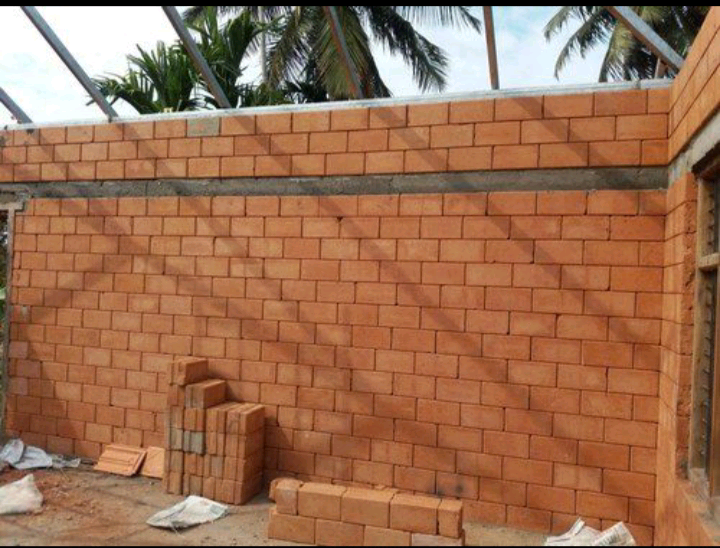
Access to decent and affordable housing remains a major challenge in many developing countries. Rapid population growth, urban migration, rising construction costs, and limited incomes have pushed quality housing beyond the reach of many families. In response to this challenge, building technology has continued to evolve, producing innovative solutions that balance cost, durability, and sustainability. One such innovation is interlocking brick technology, a construction method that is steadily transforming the housing sector.
Interlocking bricks are specially designed blocks that fit into one another without the need for thick layers of mortar. Unlike conventional bricks or stones, these bricks lock together through grooves and ridges, creating a strong and stable structure. Cement is only used at strategic points, such as the foundation, columns, and ring beams. This simple but effective design reduces material costs while maintaining structural integrity.
One of the greatest advantages of interlocking bricks is their contribution to affordable housing. Traditional construction methods require large quantities of cement, sand, and skilled labour, all of which increase building costs. Interlocking bricks significantly reduce cement usage, sometimes by up to 50 percent. In addition, the uniform shape of the bricks makes construction faster and easier, lowering labour costs. This makes it possible for low- and middle-income families to build permanent homes at a fraction of the cost of conventional methods.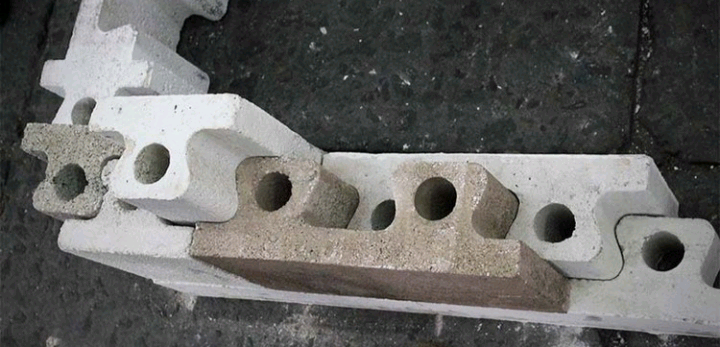
Speed of construction is another major benefit. Because the bricks are uniform and self-aligning, walls rise quickly with minimal adjustments. This reduces construction time and allows projects to be completed within shorter periods. Faster construction not only saves money but also minimizes disruptions for families and communities. For government and non-governmental housing projects, this efficiency translates into the ability to build more houses within limited budgets.
Interlocking brick technology also promotes environmental sustainability. Many interlocking bricks are made from locally available soil, stabilized with a small amount of cement. This reduces the need for quarrying stones, an activity that often leads to land degradation and environmental destruction. Furthermore, since the bricks do not require firing in kilns, there is less reliance on firewood, reducing deforestation and carbon emissions. In an era where climate change is a growing concern, such eco-friendly construction methods are increasingly important.
Durability and strength are often questioned when new building technologies are introduced, but interlocking bricks have proven to be reliable when properly manufactured and installed. The interlocking mechanism distributes loads evenly across the wall, enhancing stability. When reinforced with steel bars and concrete at key points, interlocking brick structures can withstand heavy rains, strong winds, and other environmental stresses. This makes them suitable for both rural and urban housing.
Another key advantage of interlocking bricks is their potential to create employment and develop skills at the community level. The technology is relatively easy to learn, enabling local artisans and youth to engage in brick production and construction. Small-scale brick-making enterprises can be established using simple machines, providing income opportunities while supporting local development. This decentralised approach to housing construction empowers communities and reduces dependence on expensive external contractors.
Despite these benefits, the widespread adoption of interlocking brick technology still faces challenges. Limited awareness, resistance to change, and lack of technical knowledge among some builders hinder its acceptance. In some areas, building regulations have not fully incorporated interlocking bricks, creating uncertainty for developers. Addressing these challenges requires public education, training programmes for builders, and supportive policies from government authorities.
interlocking bricks represent a practical and innovative solution to the housing challenges facing many communities today. By reducing construction costs, speeding up building processes, promoting environmental sustainability, and creating local employment, this technology offers a holistic approach to affordable housing. As demand for decent shelter continues to rise, embracing interlocking brick technology may be a crucial step toward ensuring that safe, durable, and affordable homes become a reality for all.