Automation and robotics are transforming industries across the world, and construction is quickly becoming one of the biggest beneficiaries of this technological shift. Once perceived as a slow, labour-intensive, and highly manual sector, construction is now adopting machines and intelligent systems that bring unprecedented levels of speed, accuracy, and cost efficiency. Robots are laying bricks, drones are inspecting tall buildings, and AI-powered tools are helping contractors manage complex tasks with precision. As East Africa rapidly urbanises and invests heavily in large infrastructure projects, the question is not whether automation will shape the region’s future, but how quickly it can be adopted to meet growing demand.
Robotics in construction refers to machines capable of performing tasks traditionally done by human workers, including bricklaying, welding, excavation, and inspection. Automation, on the other hand, involves digital systems and software that streamline project management, eliminate delays, and enhance accuracy. Together, these technologies are redefining the construction landscape by reducing human error, minimizing wastage, and increasing productivity. For East Africa—where urban housing deficits persist and delays in public projects often stretch budgets—these innovations offer practical and scalable solutions.
One of the most exciting applications is robotic bricklaying. Machines such as the Semi-Automated Mason (SAM) can lay thousands of bricks per day with perfect precision, significantly reducing the time required to build housing units.  This is particularly important for East Africa’s affordable housing agenda, as governments across Kenya, Tanzania, Uganda, and Rwanda seek faster ways to meet demand. These robots do not replace workers but complement them, allowing human labour to focus on more skilled tasks like finishing, roofing, and plumbing while robots handle repetitive and strenuous work.
Another major advancement is the use of autonomous heavy machinery. Excavators, bulldozers, and graders fitted with sensors, GPS, and artificial intelligence can carry out excavation and earthworks with superior accuracy. This reduces rework, conserves fuel, and allows large projects to move faster. In East Africa—where major roads, dams, and commercial projects are underway—autonomous machinery could drastically improve project timelines and reduce construction costs, helping governments stay within budget and deliver infrastructure more efficiently.
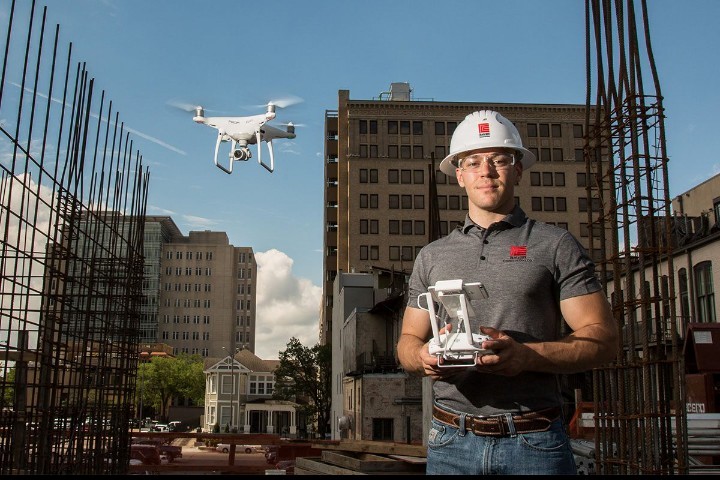
Safety, a major concern in the construction industry, is also being revolutionized by automation. Drones equipped with high-resolution cameras can survey large construction sites, inspect tall structures, and identify hazards without putting workers at risk. AI systems analyze site images in real time, detect unsafe behavior, and alert supervisors before accidents happen. In a region where construction-site injuries and fatalities remain a challenge, such systems could transform safety standards and reduce insurance and medical costs.
Automation goes beyond physical robotics. Software such as Building Information Modelling (BIM), AI scheduling tools, digital permits, and automated cost estimators are increasingly shaping modern project delivery. These digital systems help contractors plan better, forecast risks early, track materials, and detect design clashes before construction begins. When combined with robotics, these tools ensure faster delivery, improved accountability, and higher quality.
However, adopting automation and robotics in East Africa comes with notable challenges. The initial cost of advanced machines is high, and many local contractors may struggle to invest without support. Technical skills are limited, requiring training programs in robotics, AI, and digital construction tools. Regulatory frameworks also need updating, as some countries do not yet have clear guidelines for robotic construction. Infrastructure issues such as inconsistent electricity, weak internet connectivity, and limited digital literacy also slow down adoption, especially in rural areas.
Despite these challenges, the long-term benefits far outweigh the obstacles. East Africa is undergoing a construction boom, with new expressways, universities, housing estates, hospitals, and energy projects being launched every year. Automation and robotics offer a pathway to deliver these projects faster, safer, and more affordably. By encouraging public–private partnerships, investing in training, and supporting innovation hubs, governments can accelerate adoption and position East Africa as a regional leader in modern construction technology.
In conclusion, automation and robotics represent the next frontier of construction in East Africa. These technologies will not replace people but will empower them—allowing workers to take on more skilled tasks while machines handle repetitive, dangerous, and time-consuming activities. As the region continues to build its cities of the future, embracing automation will be key to achieving efficiency, sustainability, and global competitiveness. East Africa stands at the edge of a construction revolution, and the adoption of robotics could be the catalyst that transforms its infrastructure landscape for generations to come.